
1. Boat Insurance Basics
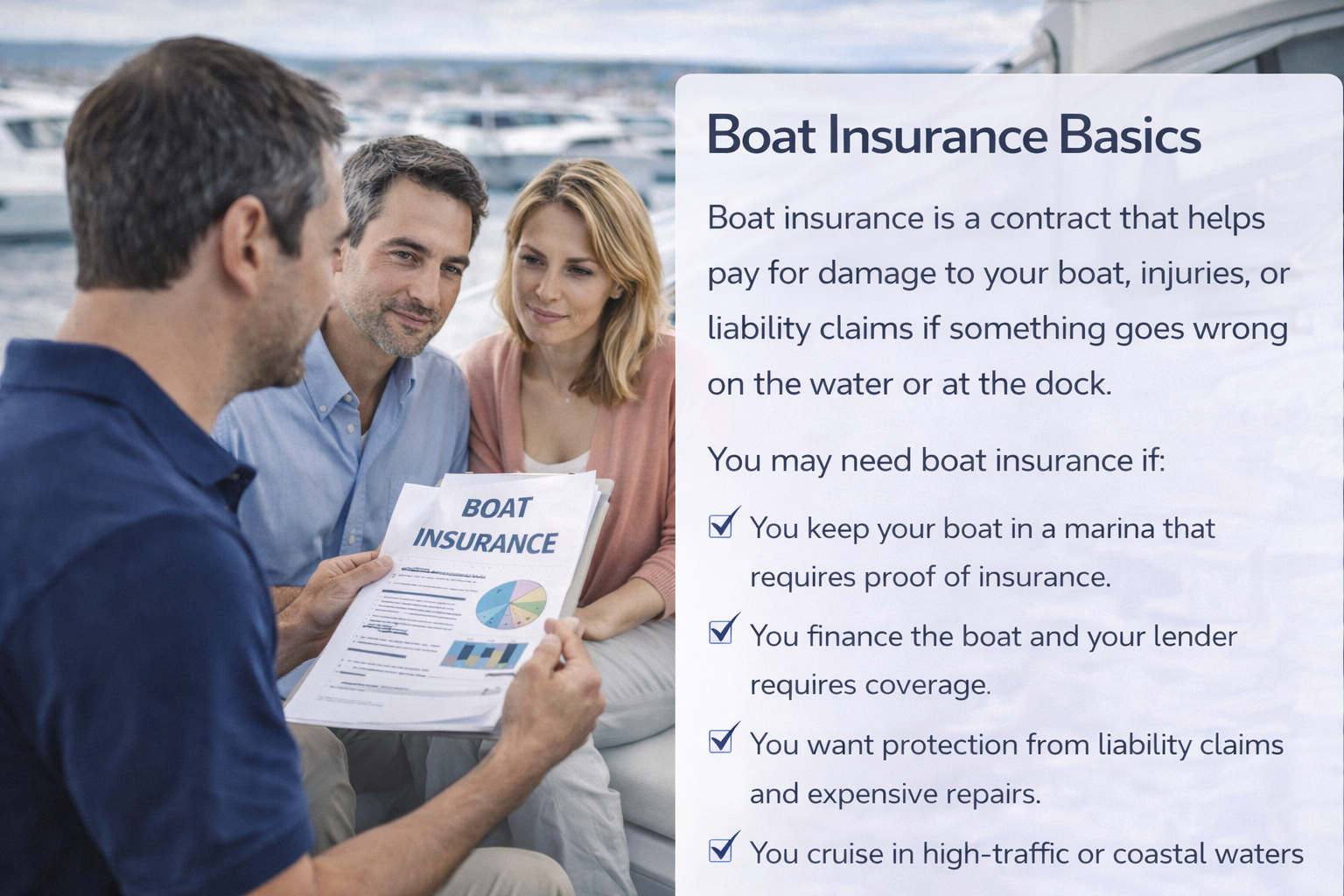
You may need boat insurance if:
- You keep your boat in a marina that requires proof of insurance
- You finance the boat and your lender requires coverage
- You want protection from liability claims and expensive repairs
- You cruise in high-traffic or coastal waters
Even smaller boats can create big financial risk in a collision or fuel spill. A well-structured policy can protect both your boat and your personal assets.
2. Types of Boat Insurance Coverage
Not all boat policies are the same. Understanding the main coverage types makes it easier to compare quotes and spot gaps in protection.
Core Coverages
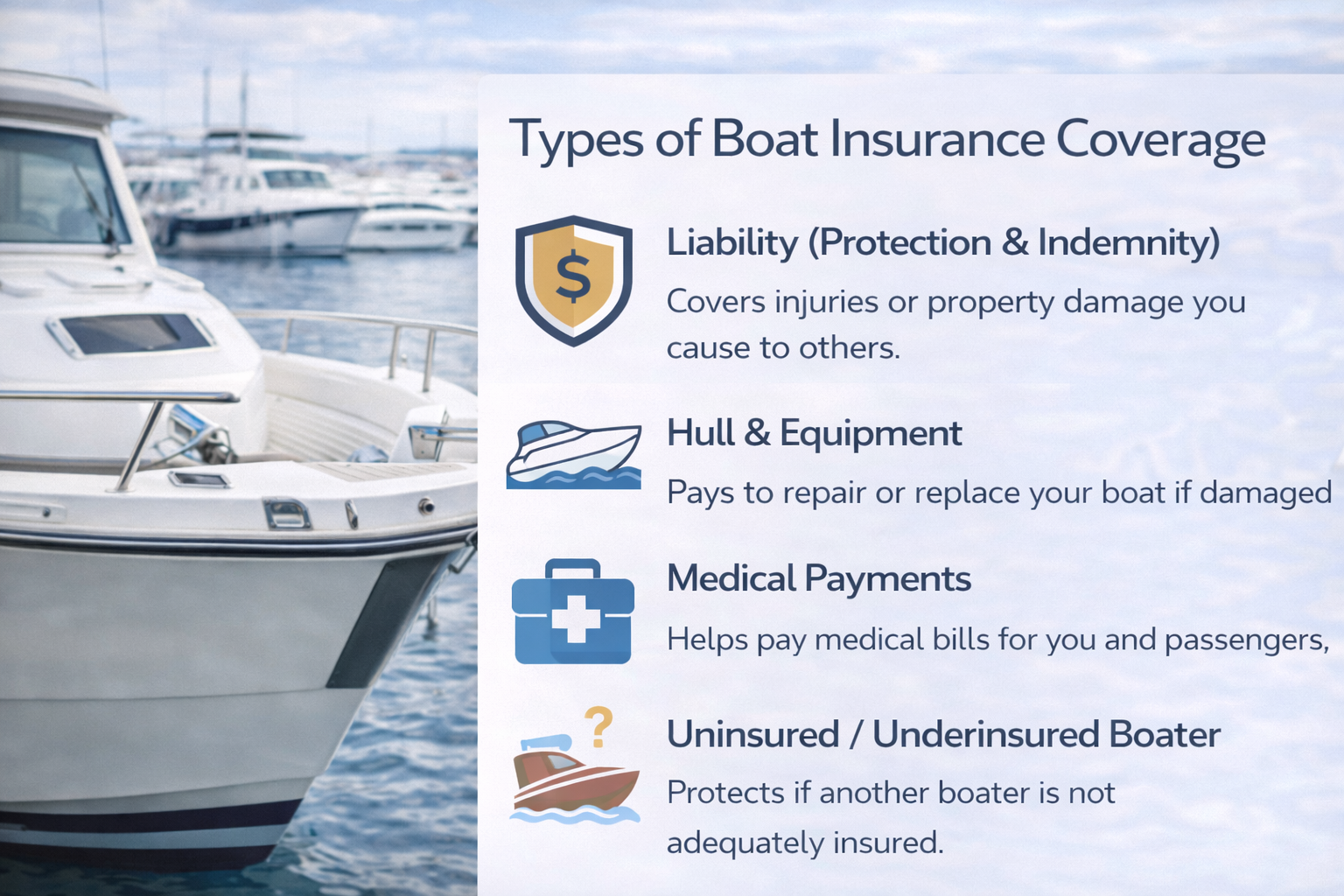
- Liability (Protection & Indemnity) – Covers injuries or property damage you cause to others.
- Hull & Equipment – Pays to repair or replace your boat if it is damaged by a covered event (collision, storm, theft, etc.).
- Medical Payments – Helps pay medical bills for you and your passengers regardless of fault.
- Uninsured / Underinsured Boater – Protects you if another boater injures you but doesn’t carry enough insurance.
Popular Add-Ons
- Towing & on-water assistance
- Trailer coverage
- Personal effects & fishing gear
- Hurricane haul-out and named storm protection
Agreed Value vs. Actual Cash Value
| Agreed Value | Actual Cash Value | |
|---|---|---|
| Payout Basis | Insurer pays a pre-agreed amount ifboat is totaled. | Payout reduced for depreciation & age. |
| Premiums | Higher, more predictable payout. | Lower premiums, lower payout. |
| Best For | Newer boats or high-value models. | Older boats where full replacement value is less critical. |
3. What Boat Insurance Typically Costs
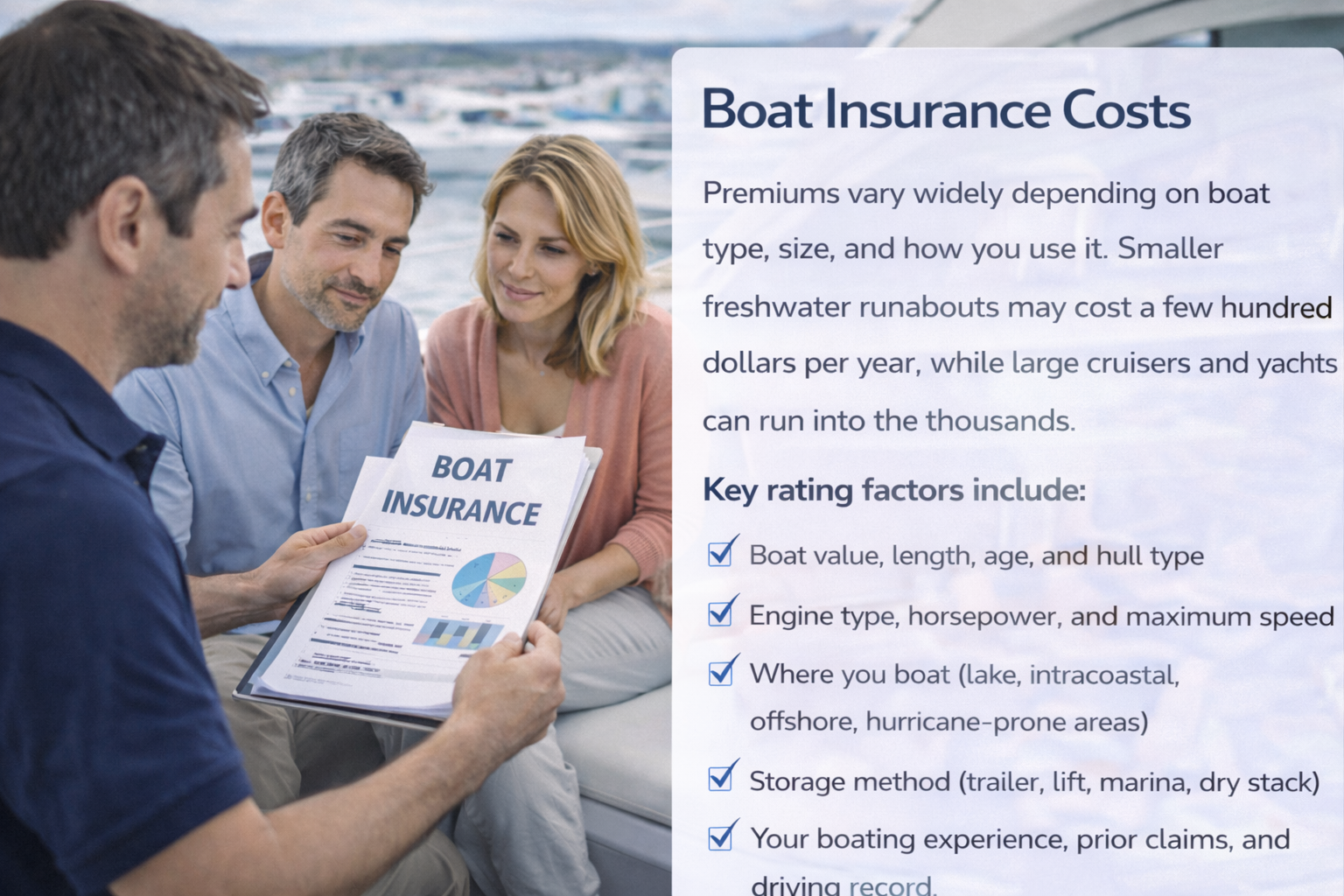
Key rating factors include:
- Boat value, length, age, and hull type
- Engine type, horsepower, and maximum speed
- Where you boat (lake, intracoastal, offshore, hurricane-prone areas)
- Storage method (trailer, lift, marina, dry stack)
- Your boating experience, prior claims, and driving record
Most insurers can provide a quote in minutes if you know your boat specs, usage area, and desired coverage limits.
Typical Premium Ranges
- Smaller freshwater runabouts & pontoons: often a few hundred dollars per year
- Larger cruisers, coastal center consoles, and wake boats: higher premiums and stronger liability limits
- High-value yachts or extended-cruise policies: require surveys and customized coverage
4. Lender, Marina & Legal Requirements
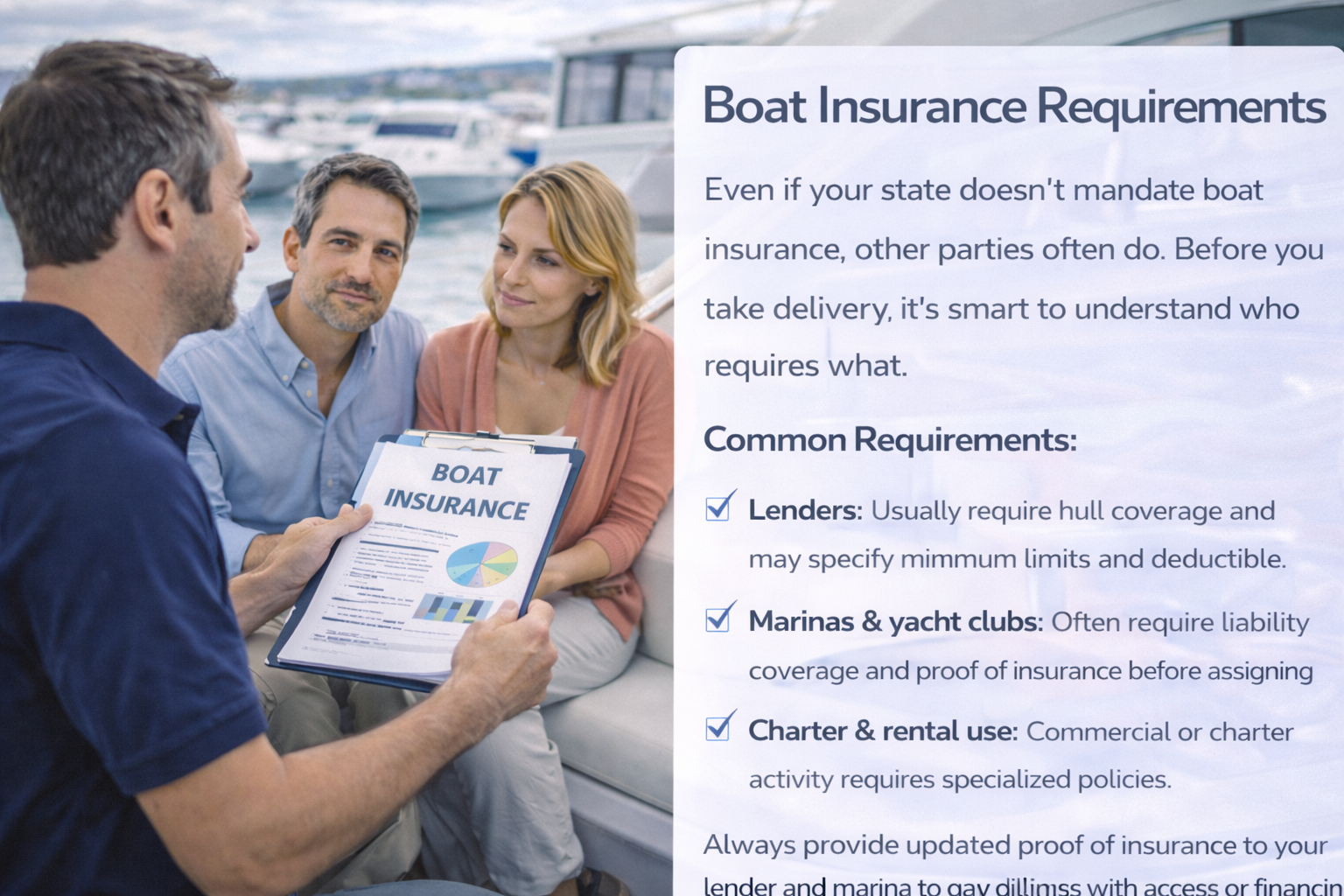
Even if your state doesn’t mandate boat insurance, other parties often do. Before you take delivery, it’s smart to understand who requires what.
Common Requirements
- Lenders: Usually require hull coverage and may specify minimum limits and deductible.
- Marinas & yacht clubs: Often require liability coverage and proof of insurance before assigning a slip.
- Charter & rental use: Commercial or charter activity requires specialized policies.
Always provide updated proof of insurance to your lender and marina to avoid issues with access or financing.
5. How Boat Insurance Claims Work
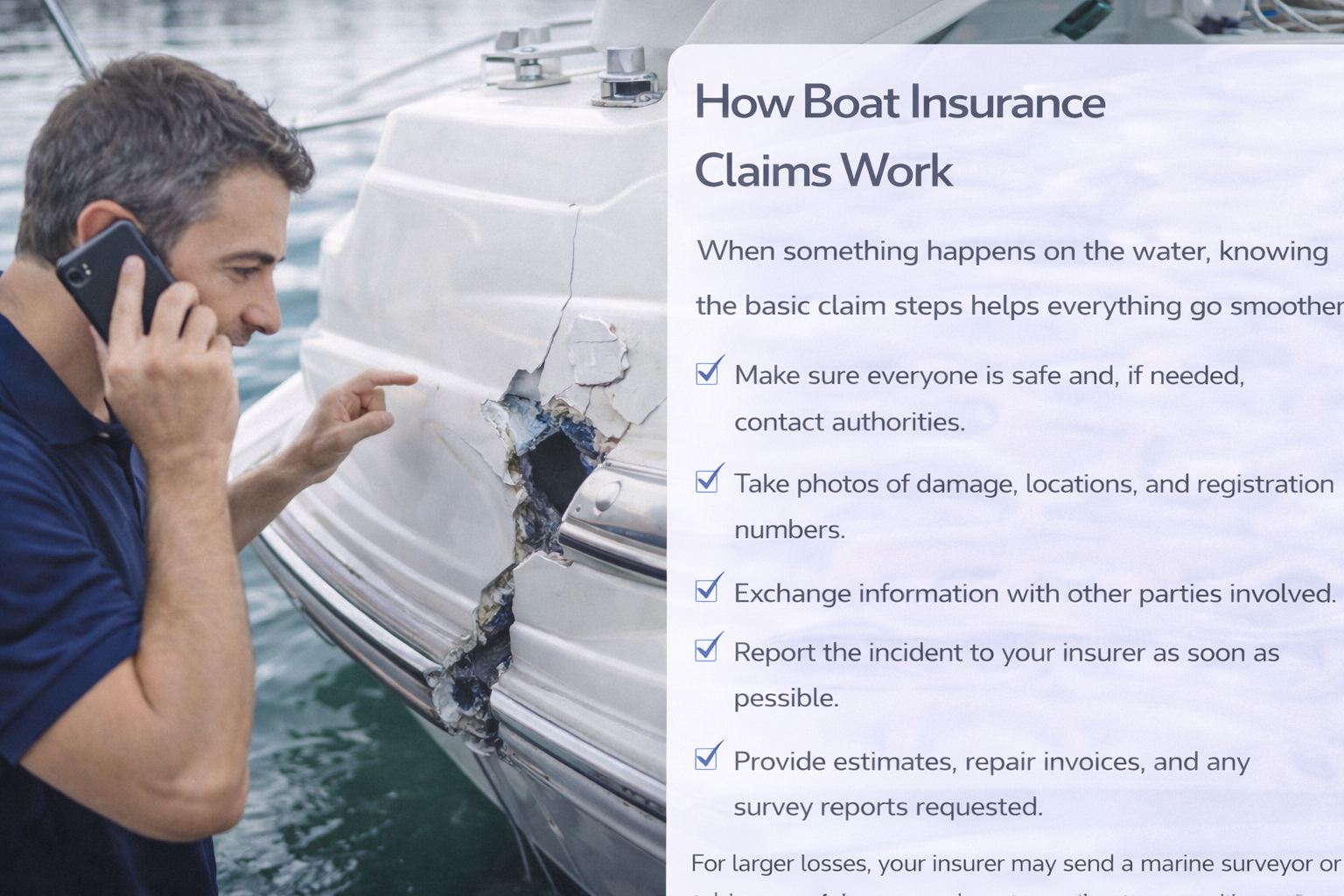
- Make sure everyone is safe and, if needed, contact authorities.
- Take photos of damage, locations, and registration numbers.
- Exchange information with other parties involved.
- Report the incident to your insurer as soon as possible.
- Provide estimates, repair invoices, and any survey reports requested.
For larger losses, your insurer may send a marine surveyor or adjuster to inspect the boat and confirm the cause and extent of damage.
6. Ways to Save on Boat Insurance
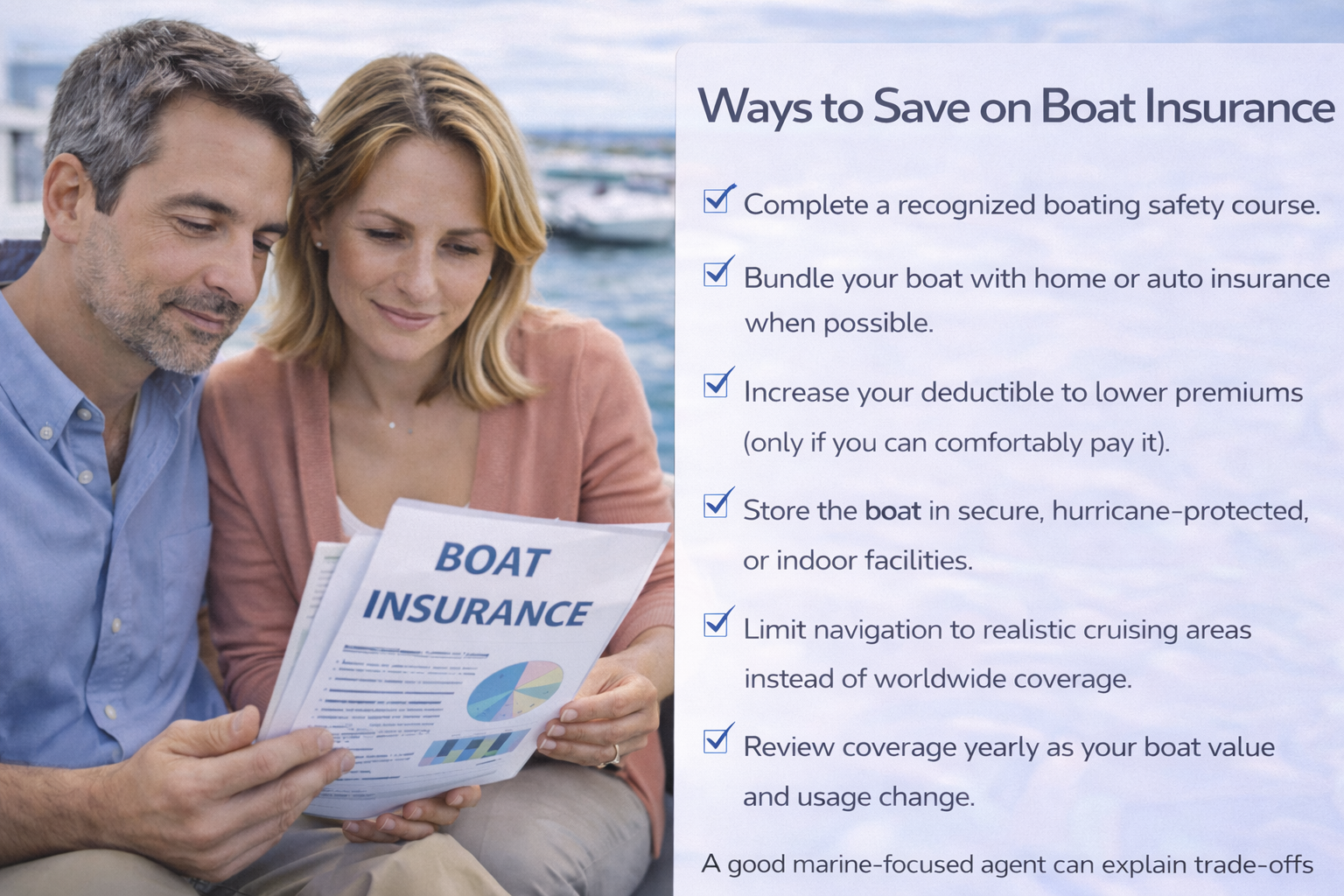
- Complete a recognized boating safety course.
- Bundle your boat with home or auto insurance when possible.
- Increase your deductible to lower premiums (only if you can comfortably pay it).
- Store the boat in secure, hurricane-protected, or indoor facilities.
- Limit navigation to realistic cruising areas instead of worldwide coverage.
- Review coverage yearly as your boat value and usage change.
A good marine-focused agent can explain trade-offs between price and protection so you only pay for coverage you actually need.